
Developing Better Athletes. Not Just Better Performers.
Every young athlete deserves physical preparation that matches where they are today—not simply how old they are.
The MatchFit Method is an evidence-led approach to youth athletic development, combining scientific research, practical coaching experience and long-term athlete development principles to help children and adolescents become stronger, faster, more resilient and more confident movers.
Rather than chasing short-term performance, we focus on building the foundations that support lifelong participation and sporting success.
Why the MatchFit Method?
Today’s young athletes face very different challenges from previous generations.
Many children now specialise in one sport earlier, spend fewer hours developing broad movement skills and live increasingly sedentary lives outside organised sport.
The result?
Young athletes are often expected to perform increasingly demanding sporting tasks without first developing the physical qualities required to support them.
The MatchFit Method exists to bridge that gap.
1. Movement Competency
Performance begins with movement.
Before developing speed, power and strength, young athletes first need the ability to move efficiently and confidently.
We develop:
- Balance and stability
- Coordination
- Jumping and landing mechanics
- Sprint mechanics
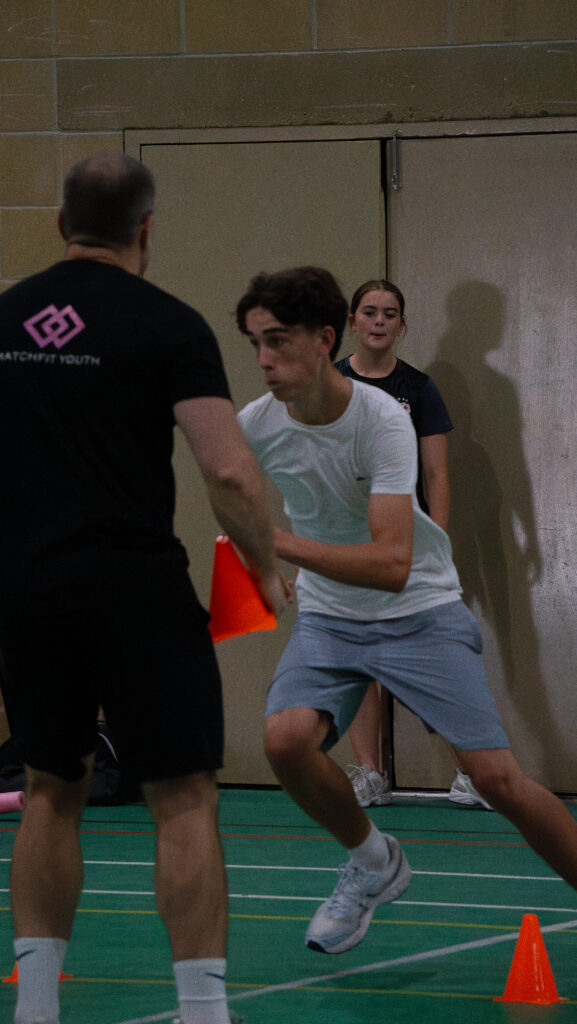
- Change of direction
- Force absorption
- Fundamental movement patterns
Movement competency provides the platform upon which every future athletic quality is built.
2. Biological Maturation
Children of the same age are rarely at the same stage of development.
Growth and maturation influence coordination, strength development, movement quality and training readiness.
That’s why the MatchFit Method considers biological maturation alongside training experience when selecting and progressing programmes.
Training should reflect where a child is—not simply how old they are.
3. Progressive Strength Development
Strength is the foundation of athletic performance.
Our programmes develop strength progressively using age-appropriate resistance training, movement quality and technical competency.
The objective is not simply to lift heavier weights.
It is to build resilient, capable athletes prepared for the physical demands of sport.
4. Speed and Power
Speed isn’t simply something children either have or don’t have.
Acceleration, sprint mechanics, jumping ability and explosive power can all be developed through appropriate training.
Every programme progressively develops these athletic qualities alongside strength and movement competency.
5. Long-Term Athletic Development
Athletic development isn’t a 12-week programme.
It’s a journey.
Every programme prepares young athletes for the next stage of development, ensuring physical qualities continue to build as children grow and mature.
The goal isn’t to create early champions.
The goal is to maximise long-term potential.
The MatchFit Journey
The MatchFit Method provides a clear pathway from childhood through adolescence.
Children develop movement competency.
Adolescents build progressively greater strength, speed and power.
As maturity and training experience increase, programmes evolve to reflect those changing needs.
Each stage prepares the athlete for the next.
Built on Research. Refined Through Coaching.
The MatchFit Method has been developed through years of coaching experience alongside current research into youth athletic development, strength and conditioning, biological maturation and long-term athlete development.
It combines academic evidence with practical coaching to provide programmes that are both scientifically informed and practically effective.
Start Your MatchFit Journey
Whether your child is taking their first steps in strength and conditioning or progressing towards higher-performance sport, the MatchFit Method provides a structured pathway designed around long-term athletic development.
Find your starting point with the free Programme Finder.
Or join the MatchFit community to receive evidence-led guidance, practical resources and the latest articles on developing young athletes.